
What’s an acceptable number?

There’s a question that rattles around my brain pan and the possible answers to it disappoint me.

How many is too many? What’s an acceptable mortality rate?

I was reminded this morning that I’m old enough to remember a time when the whole nation watched in trembling fear and hope as a group of workers struggled to save one little girl who had fallen down a well.

We are no longer that nation. Oh, we could probably muster enough empathy for a brief prayer but the actions many are taking today, right now, demonstrate that anything beyond that is hypocritical or wishful thinking.

There is a very large portion of our citizenry who just don’t care about anyone but themselves and maybe their own kids. They can’t bear minor inconveniences, even if that inconvenience could save a life.

“Don’t you dare force my kid to wear a mask at school,” they say, though some often use stronger language.

These people astroturf our school board meetings using words put in their mouths by agenda-driven groups and spread misinformation (I’ll be generous, here) and over-the-top threats should any trustee have the audacity to suggest anything more stringent than strong suggestions.

Their verbal assaults have stayed the hands of trustees across the state who want to do the right thing but lack the votes to actually do anything substantive to slow the spread of the virus through our schools.

If you think I’m guilty of hyperbole, tune in to Thursday’s meeting of the LISD school board. I’ve watched the last few meetings. It’s embarrassing.

Right now, Leander ISD leads the Central Texas region with more than 1,000 positive tests for the virus, far ahead of Round Rock’s 650. Right now, Leander ISD has 27 classes or entire grade levels on “remote conferencing” because too many of the children in those classes have been exposed to the virus.

Last week, Connely ISD closed down after two teachers died of COVID-19 infections and Austin Public Health reported the first child death from the virus.

What will it take for folks — especially those who are in charge of our kid’s safety — to take stronger action?

The death of a teacher (that actually happened last year, as I recall)? The death of a Kindergartner? Would that be enough?

Three deaths? Five?

What number of child COVID deaths is acceptable for school leaders and trustees to ignore the loud and obnoxious astro-turfing parents and Gov. Abbott’s toothless dictates and implement a no-opt-out mask mandate on our public school campuses?

Because, at the rate we’re going, every unvaccinated child in our public schools will have the opportunity to recover from this disease. Or not.

There’s a cynic in my brain that says that 20 child and seven teacher deaths aren’t enough to change some people’s minds. That’s how many elementary school kids and teachers were murdered at Sandy Hook. It didn’t change very many minds about unfettered access to guns.

A few deaths among Leander students probably won’t change very many minds about masks, either.

Like I said, I’m exhausted. And very disappointed.
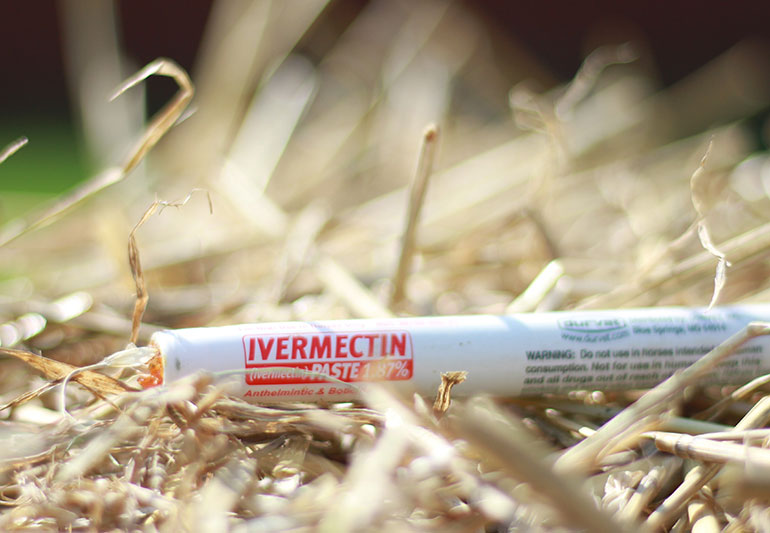
Yep. People are eating livestock de-wormers. Don’t do that.

It’s true. People are eating a de-wormer, mostly intended for farm animals, to ward off or treat a Covid-19 infection and that’s prompted public health officials from across the state and the nation to issue a warning about it.

Last week, the Texas Department of State Health Services (DSHS) issued a warning that the improper use of ivermectin to treat or prevent COVID-19 infection by could lead to serious health complications and it doesn’t really help against the coronavirus. The Centers for Disease Control and the U.S. Food and Drug Administration issued similar warnings.

The Williamson County and Cities Health District posted the CDC warning to social media but said it doesn’t have any comments on ivermectin use in humans.

Despite these warnings, pharmacies and feed supply stores have seen a run on the product and the Texas Poison Control Center’s hotline is burning up with calls from people concerned about overdosing on the livestock dewormer.

According to the DSHS statement, calls to the Texas Poison Control Center about ivermectin exposure increased about 150% in August over the previous month.

“More than half of the 2021 calls (87, 55%) were potential Ivermectin exposure taken in an attempt to treat or prevent COVID-19,” according to the DSHS statement. “Most of the calls were about people experiencing mild symptoms, but for 52 (33%), the patient was either on the way to a health care facility or was referred to a health care facility, suggesting more severe effects.”

“Nausea, vomiting, and abdominal pain. However, you can have further problems, including mental status changes, coma, even seizures, and there have been deaths reported,” said Dr. Shawn Varney, the Medical Director of Texas Poison Center, reported in a Texas Public Radio Network story. “No, I haven’t seen any deaths here in Texas, but these are things that are reported by the manufacturer with people who use large doses.”

He said that the center has received 260 calls with ivermectin poisoning so far this year. He said the poisoning can be accumulative, so if a person takes multiple small doses over time, there can be a sudden overdose.

That hasn’t stopped a run on the product in area stores. One local chain pharmacy posted on social media Sunday that ivermectin was “officially on backorder, we do not have any.”

An internet search for the websites of WilCo feed stores also shows the product out of stock or on back order.

“The past few months it’s been ivermectin. Last year, it was hydroxychloroquine,” said Varney in reference to the drug used to treat malaria, lupus, and rheumatoid arthritis that was once touted to treat the coronavirus and was later proven ineffective and harmful in some cases. “What is it going to be next week? There’s something else will come along and will take its place. It’s part of the desperation for searching for a cure. But right now the best thing we have is the vaccine.”

There are formulations of ivermectin approved for human use, by prescription — for the treatment of head lice and some skin conditions, but ivermectin found in a feed store is formulated for animals.

“(The medications) have different carriers in them or different products to help get them in your blood stream.” said Varney in the radio interview. “They haven’t really been studied in humans either to know what the effect would be because they weren’t ever meant for humans. So there are different complications and problems that people may run into.”

“Ivermectin is not an anti-viral drug that can treat viral illnesses such as COVID-19,” said the DSHS warning. “The FDA has not approved ivermectin for treating or preventing COVID-19. Large doses of ivermectin can cause serious harm.”

Even the manufacturer of ivermectin warns against its use in humans.

According to the Merk website, “… company scientists continue to carefully examine the findings of all available and emerging studies of ivermectin for the treatment of COVID-19 for evidence of efficacy and safety.

The website noted that the company’s analysis has identified:
• No scientific basis for a potential therapeutic effect against COVID-19 from pre-clinical studies; 
• No meaningful evidence for clinical activity or clinical efficacy in patients with COVID-19 disease, and; 
• A concerning lack of safety data in the majority of studies.

“We do not believe that the data available support the safety and efficacy of ivermectin beyond the doses and populations indicated in the regulatory agency-approved prescribing information.”

“Let’s encourage the vaccine and avoid taking all these medications,” said Varney.