… or, how I kinda-sorta learned to love craft beers
— • —
NOTE: This feature story was first published in the Winter 2018 issue of Taylor 76574. It was one of my favorite feature stories written while I was at the Taylor Press but I couldn’t find it anywhere so I decided to post it here — along with the photos I took — as a way to preserve it.
— • —
“He is a wise man who invented beer.” – Plato
“Beer is proof that God loves us and wants us to be happy.” — Possibly Anonymous; often (mistakenly) attributed to Benjamin Franklin
— • —
Taylor and beer go hand in hand. I suppose it has to do with our Czech/farming heritage but there is no question that many people in Taylor and East WilCo like the occasional beer.
I do too. I used to believe I was a bit of a sophisticate when it came to beer, since I drank Shiner Bock before it was cool. I also drank Lone Star longnecks back then, before hipsters “discovered” them. Later, I switched to Dos Equis.
Once the craft beer renaissance came to Texas, my beer drinking habits were no longer cool. The taste of those beers lacked the crispness I anticipated. They could be unexpectedly bitter or sour, off-putting. I tried. I did. But I decided those beers weren’t for me.
Then, Taylor got its own craft beer place and, suddenly, my ignorance took on an economic imperative. Plus, the bartender at that new taproom developed a tick that showed up whenever I asked for “the closest thing you’ve got to a Dos Equis.” That, and the rising local interest in craft beer, is the impetus for this article, so I plotted a tour of Williamson County brew pubs.
I reached out to a couple of friends: Ken Cooke, the former publisher of the Rockdale Reporter who now publishes the paper in Fredericksburg, and Lee Nichols, the former beer editor at the Austin Chronicle and the San Antonio Current (yes, there is such a thing as a “beer editor” — or used to be).
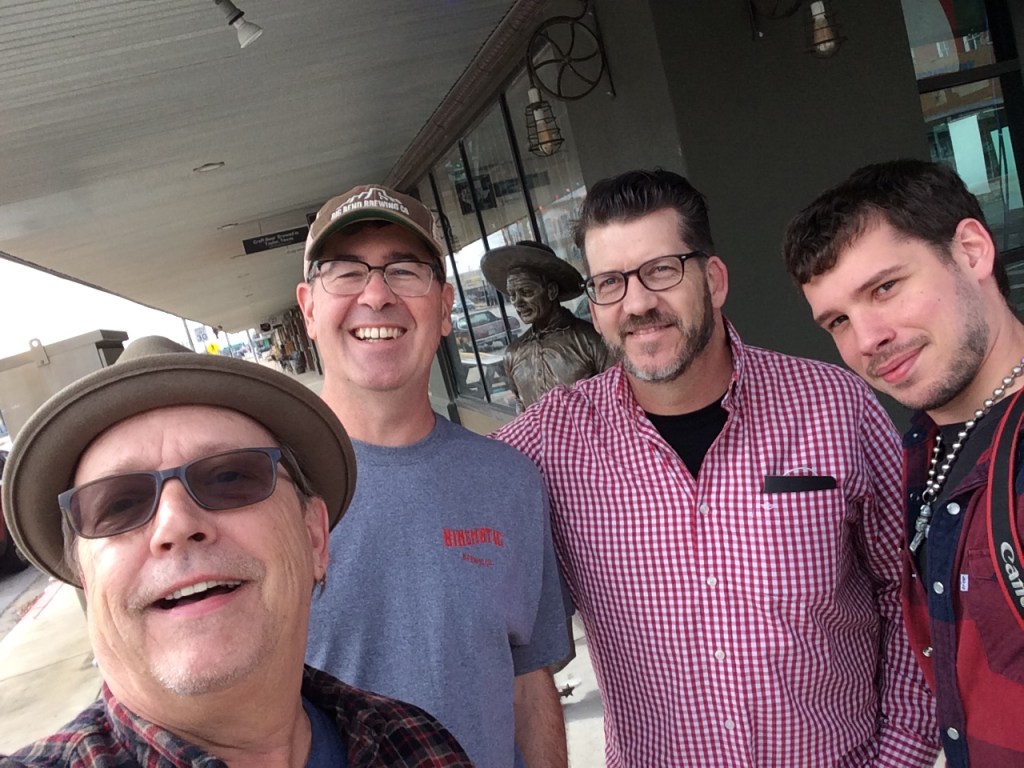
Our mission: visit as many of the breweries in Williamson County as time and inebriation would allow. We intended to sample only the beers that particular place brewed. At each stop, we would buy a sampler of four or five beers, share that sampler and make a report.
— • —
We met at the Texas Beer Company’s taproom.
Dylan, our driver for the day, loaded us, along with Matt the Photographer, into a big, shiny black Tahoe for the trip to our first stop in Granger. The Tahoe was courtesy of Cynthia Karkoska of Cynthia’s Manhattan Limousine, who learned of our impending pub crawl and decided that three grown men loose on the highways and back roads of Williamson County on a pub crawl was a remarkably bad idea. I agreed.
We could have been mistaken for slumming but well-heeled tourists or, maybe even covert government operatives. The Tahoe and driver lent that kind of undercover air to our mission.
On the road to Granger, I explained my lack of beer knowledge.
“That’s your training-wheels beer,” Lee chuckled when I told him I preferred a Mexican lager to most any craft beer. “Everyone has a training-wheels beer.”
— • —
Granger City Brewing Company is a 30-barrel pub with a handful of beers on tap. It’s sort of a dive but perfect for Granger. Think Ed’s Place rather than the Texas Beer Co.
The ale was unsurprising but good. I liked the Winterfest — just a wee bit stronger than the golden ale — but I was terrified of the porter.
I grimaced at my first taste. Lee took a sip and said it was interesting. “Most porters have a strong chocolate flavor. This doesn’t. It’s very smooth.”
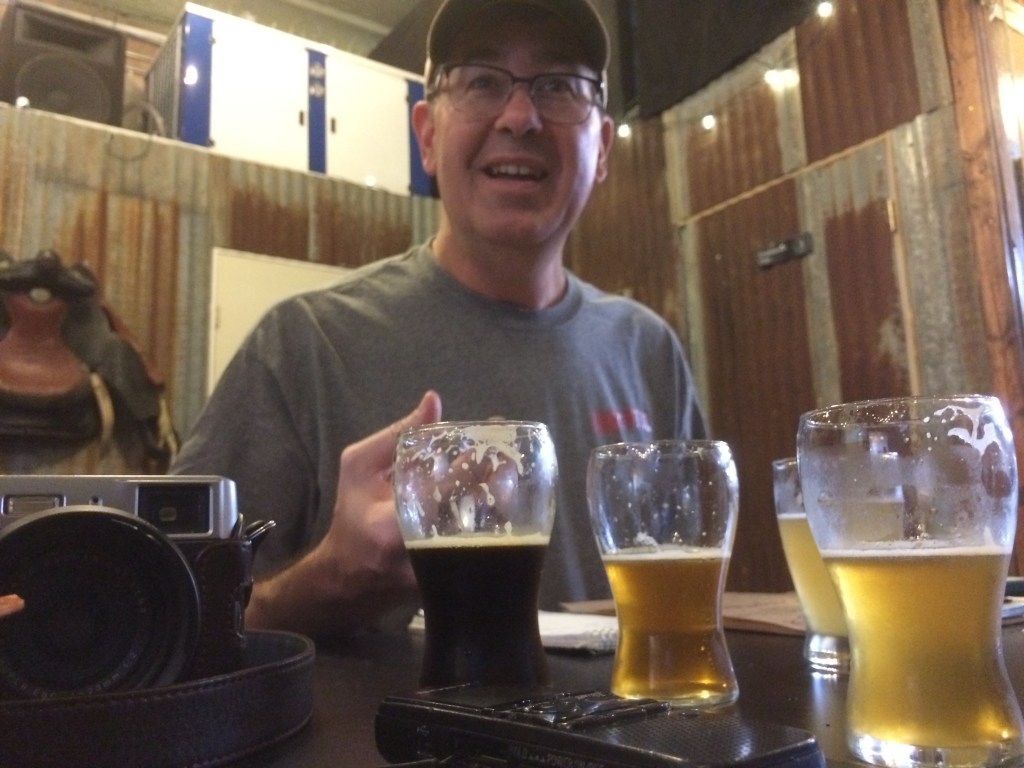
I took another tentative taste, then a swallow.
No chocolate but it had a deep roasted flavor that, once I opened my mind and taste buds, did have a velvety smoothness that reminded me of a particularly good cabernet.
I decided to keep an open mind.
— • —
Ken went off the rails at our next stop, the Rentch Brewery in Georgetown.
The bartender drew samples of five or six beers, among them a Russian Imperial Stout.
We sat down to work but Ken sidled back to the bar.
“What?” he asked when he returned bearing an 8-ounce glass brimming with a foamy, sinister, deep brown liquid. “I’ve never met an Imperial Stout I didn’t like.”
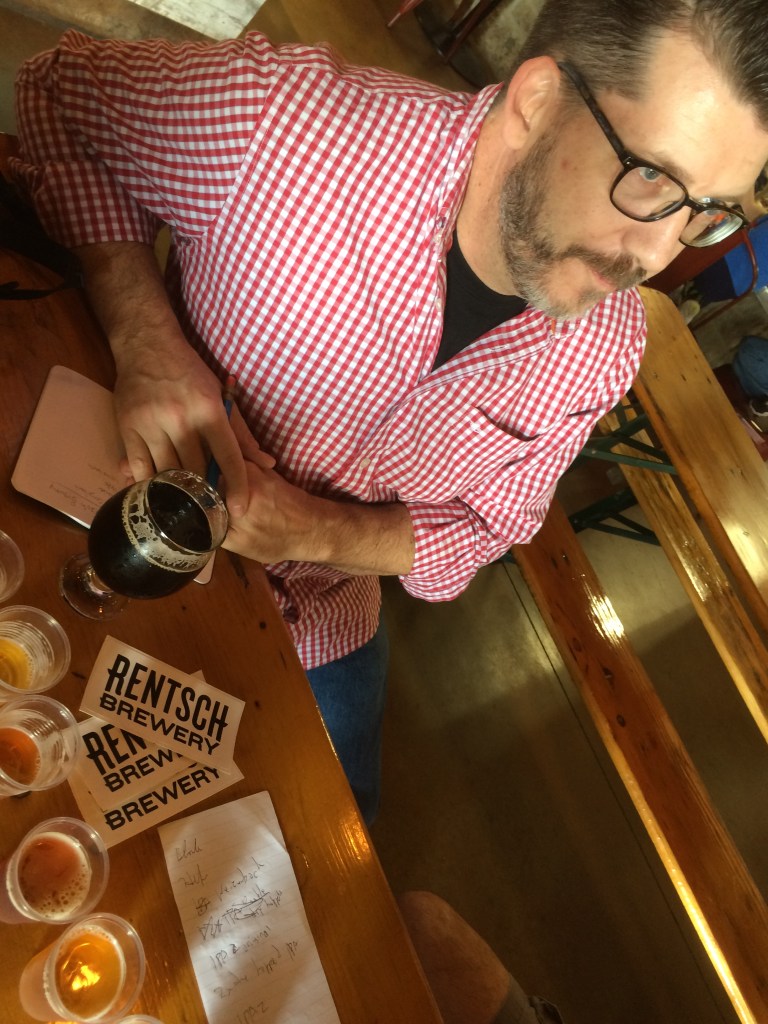
“I’d say, right about now, you’re screwing up,” said Lee with a laugh. “This is a marathon, buddy, and in mile three you suddenly decided to go into a full sprint.”
The stout boasted an alcohol content of 12 percent.
“That’s violating rule number one. Don’t go for anything higher than about 6 or 7 percent alcohol when you’re doing a pub crawl,” said Lee. “I’d go to that at the end of the day.”
Saving the stout for last, I tried the Hefeweizen. It was … interesting. And a little sweet.
“You might be picking up a little banana flavor,” said Lee. “That’s because of the yeast in brewing.”
Then, I faced the first IPA (India Pale Ale, but in the American style) on the tour. Nearly everyone I know who purports to appreciate craft beer seems to gravitate to an IPA of some sort.
“You like whisky, right?” Lee asked. “I think you could really learn how to like IPA. It’s the same thing. Because of the extra hops, it’s all about learning how to like bitterness.”
So, hops in beer equals peat in Scotch. Got it.
I sampled their Double IPA.
“It’s a little grassy,” I wrinkled my nose. Not unpleasant. The taste of newly mown hay, maybe?
“That’s the double dry hops,” Lee explained. “Normally, the hops are boiled into it. For the double, you have some extra hops — might be different hops — and then run the beer right through it.”

Finally, we came to the Russian Imperial Stout. Ken had begun to list a bit from his own half-pint.
“Here’s the plunge off the deep end,” Lee announced and he picked up the plastic cup in salute. He knocked back a swallow. “Wow. You’ll either hate it or love it. It’s a strong flavor.”
Compared to the porter we had in Granger, it was bitter and very chocolate forward.
“This is aged in bourbon barrels,” said Lee. “That’s what you’re really tasting. A Russian Imperial Stout has some pretty strong flavors anyway but, when you age it in bourbon barrels, it’s like taking a baseball bat to your mouth.”
What a metaphor. I neither hated nor loved it. Still acquiring the taste.
— • —
We learned an important pub crawl technique at Red Horn Coffee House and Brewing Company in Cedar Park.
“Oh, this is the brisket beer. You should try that last,” said Lee examining Red Horn’s offerings. “Start with the three in the middle because the others will have a stronger flavor. Sample those last, just so you don’t wreck your taste buds.”
Right. The lighter beers first. The deadly porters and stouts last.
The three beers in the middle were an IPA, a golden ale and a farmhouse saison. The two on the ends were a vanilla stout and something called a Brisket Porter. We’d asked for the last because, well, Taylor.
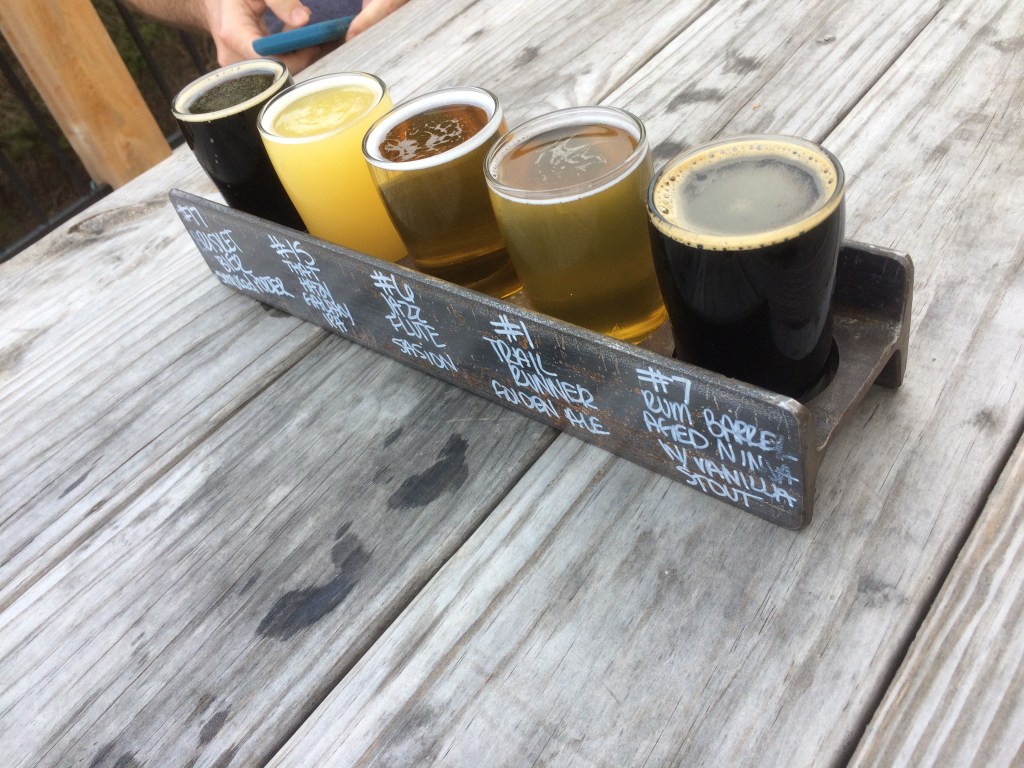
We sampled and commented on those three — and all three had unexpected flavor profiles.
The IPA was sweeter than anyone expected, with a strong grapefruit flavor. The stout tasted of rum and vanilla. The ale was clean and crisp.
“So, are we gonna make Richard be the crash test dummy?” asked Mat the Photographer, pointing at the Brisket Porter.
“Don’t call your boss a dummy,” joked Ken as he tossed back the last of the IPA.
Not without a bit of trepidation, we all sampled the Brisket Porter.
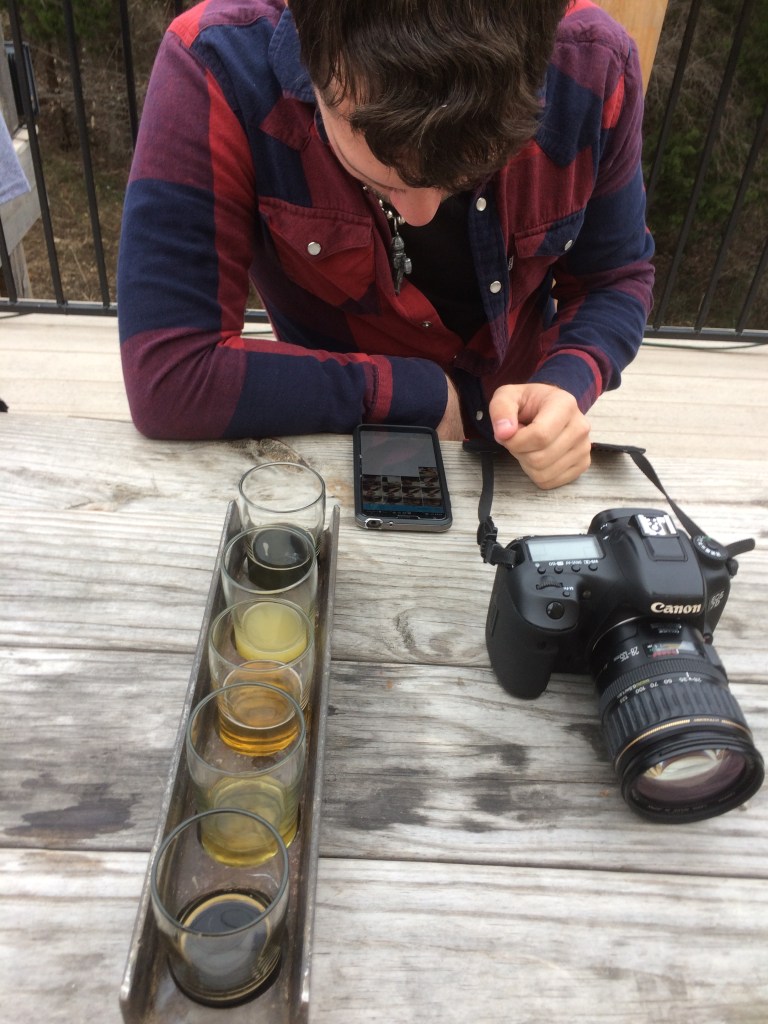
“This is probably a rauch beer,” said Lee after a hearty swallow. “It does not actually taste like brisket.”
I disagreed. It tasted like someone brewed up a barrel of port then soaked it in a batch of Wayne Mueller’s burnt brisket ends.
“Definitely a brisket overtone to it,” Ken allowed.
“The malt is smoked,” Lee explained. “That’s what gives this a smoky flavor.”
— • —
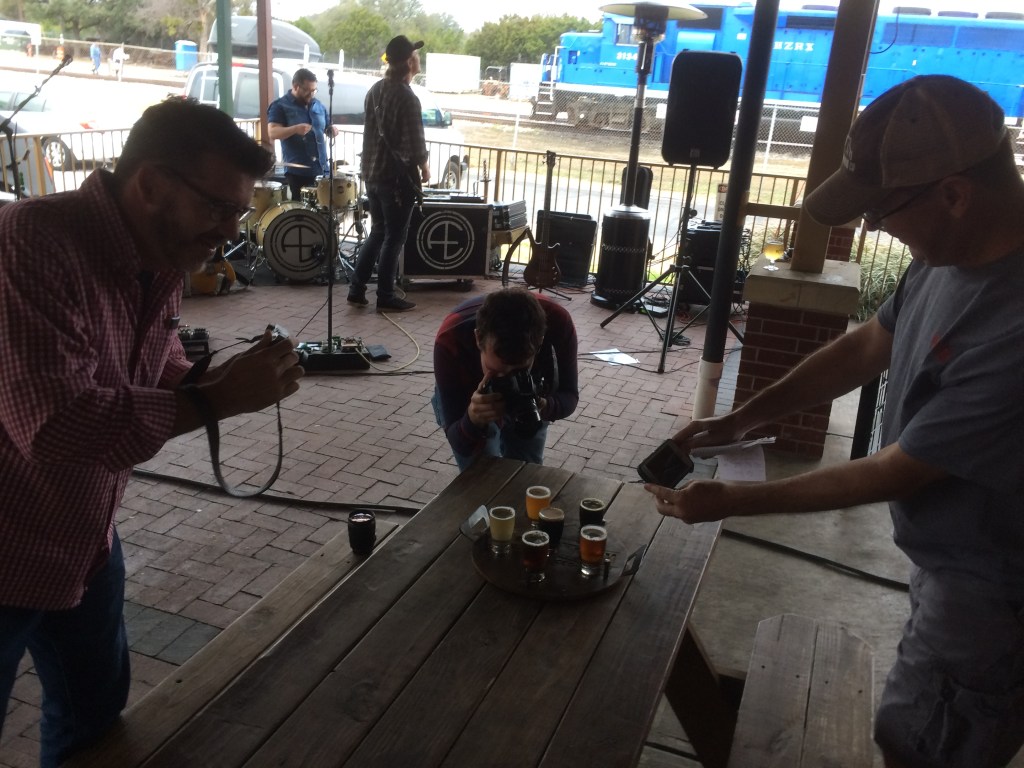
Our next stop was the Whitestone Brewery, where we learned another important bit of beer trivia: it’s something of a tradition that certain craft bock beers should have a name that ends in “ator.” As in Bockanator.
“Gives it that Schwarzenneger feel,” joked Ken.
We also learned that dark beers — stouts, porters and certain bocks — don’t need to be ice-cold. In fact, as they are winter beers, they shouldn’t be too cold at all, nor are they really intended to be consumed in the summer.
“I never ever recommend you drink a doffelbock (double bock) in the summer,” Lee opined. “It will make your mouth feel like it’s full of cotton. It is a winter beer.”
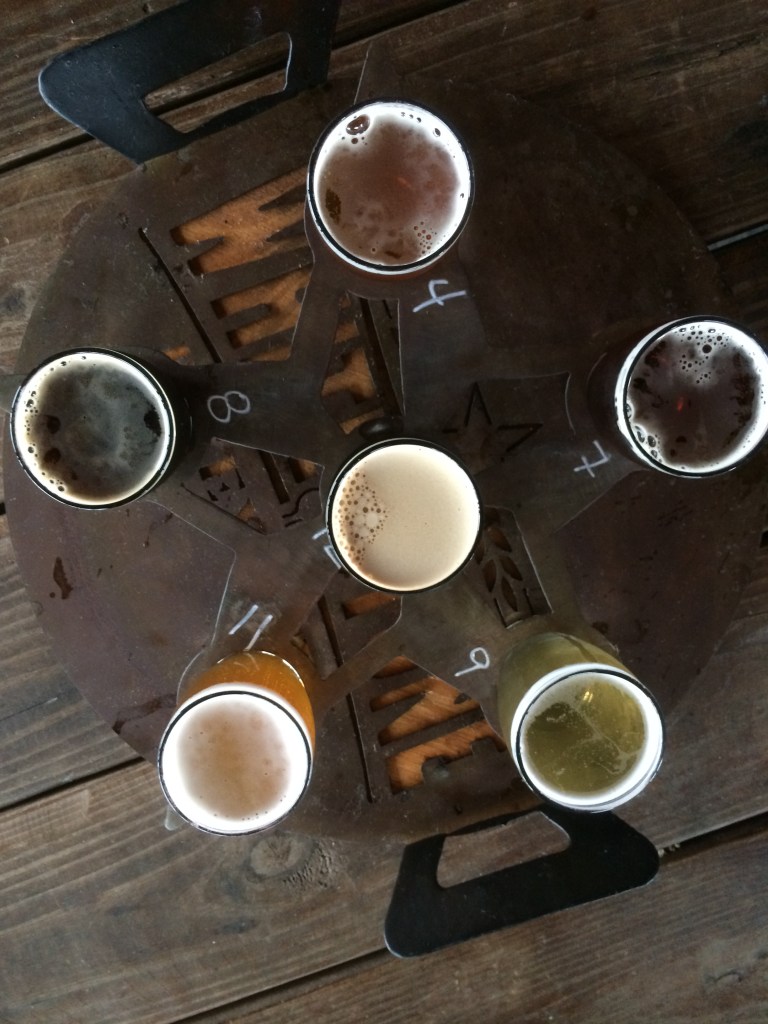
We tried a few summer beers.
The Berlierweiss, a sour beer, tasted like a good dry chardonnay. Almost champagne.
“This would be much better in the summer, and if I wasn’t sitting here shivering,” he said. “Why didn’t you tell me to bring a jacket?”
“You brought a jacket,” Ken answered. “You left it in the car.”
— • —
During our stop at Whitestone, we carved a few breweries from our itinerary as the day was getting long.
We headed to Idle Vine Brewery in Cedar Park, only to learn it was celebrating its first anniversary. The line into the taproom snaked out of the double freight doors and around the building.
A tent outside sold canned versions of their brew so, while waiting for Dylan the Driver to make the block, we tried their IPA. The others liked it. I’ve yet to acquire the taste.
We jumped over to Bluebonnet Beer Company in Round Rock. Frankly, by this point, my ability to distinguish between the brews I’d sampled earlier in the day to those served up by Bluebonnet had paled. They all seemed just fine, though Ken and Lee pronounced them quite good.
— • —
Finally, back to Taylor and the Texas Beer Company.
We sample their IPA, porter, blonde and amber beers.
A team from Davis BBQ had set up sandwich-makings on the counter. The brisket sandwiches were a welcome addition to our bellies.
Ken said he really dug the amber. I sampled the blonde and, finally, discovered why I haven’t taken to it like I expected — hops.
“It’s a hoppy blonde,” said Lee, wiping a scud of foam from his lips. “It’s a bit hoppier than most blondes but I like it.”
Then, we sampled the porter.
“That has good flavor,” said Ken. “A little bit of chocolate, but not a lot. Very good.”
True to his instructions, Lee closed out the tour with a glass of the King Grackle Stout.
“Ohhhh, that’s good,” he sighed. “This may be the best beer of the day.”
— 30 —
 The Ragged Edge @ WilCo Blues