
So, it appears that we’ve reached the stage in our dystopian nightmare where we destroy the United States Postal Service.
I wasn’t aware this was even in the script but, petrifying plot twists mid-way through Act III are a staple in apocalyptic thrillers. Call me stupid but I expected swarms of angry murder hornets. (Who introduces murder hornets at the end of Act I then lets them fade into the background noise, never to be heard from again? If nothing else, this proves that this season’s writing room is fubared.)
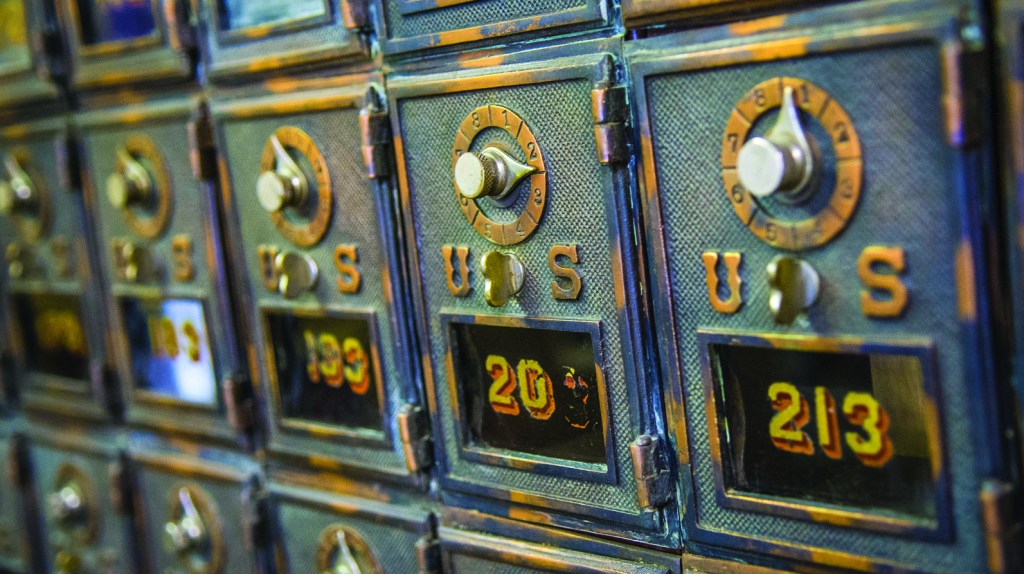
The USPS delivers most of the small, weekly newspapers in the country so I’ve dealt with it for decades, often to my dismay. I’ll be the first to acknowledge that the post office has problems, and that some of those problems go beyond the much-maligned 2006 Postal Accountability and Enhancement Act, or that it doesn’t charge Amazon enough for “last mile” delivery.
The rise of the internet tanked the volume of first-class mail in circulation. Costs, on the other hand, haven’t gone down, nor has its mission changed. The coronavirus pandemic has sent those problems spinning out of control. Mail volumes have declined and “sales” are “plummeting.”
The post office is losing money. If it were a business, and not a governmental service, it would be in deep trouble. Cost-cutting efforts have only damaged this service’s credibility without staunching the flow of red ink.
But, the post office isn’t a business. It’s a service, a unique agency. While it’s meant to be self-sustaining, it also has to follow rules set by Congress that result in higher costs — notably, it’s expected to deliver mail daily and keep postage rates flat for all parts of the country.
I mean, try to get FedEx or UPS to deliver anything all the way across the country, in usually about three days, until recently, for 55 cents. That same service from FedEx will cost you $8.50.
Oh, and try to get them to pick up anything from an address in deeply rural Texas and deliver it to another deeply rural part of the country for any amount of money. They won’t. They don’t want to. It costs too much and doesn’t fit their business model.
But the post office does … even for FedEx and UPS. Every day. Including Sunday.
Plus, if the person to whom you sent the letter has moved, they’ll spend the next year trying to make sure that person gets it!
The post office delivers mail, prescriptions (notably for veterans), social security checks and tax refunds (for those of you who are skeptical of direct deposit), Christmas and birthday cards, rent checks, bills, critical business deliveries, your weekly newspaper … and it doesn’t matter where you live. A mail carrier will pick it up at your mail box and deliver it anywhere in the country.
All for 55 cents per piece.
It has an incredibly diverse workforce of about 600,000 people and is the single largest civilian employer of military veterans. It’s also where you get a passport and the point of last resort for people to buy secure money orders.
Finally, it’s one of the very few organizations specifically mentioned in the Constitution. Newspapers are the other one.
But, it also delivers and picks up mail ballots. It is for that reason that it has come under harsh political fire.
That political pressure appears to have slowed mail delivery and decommissioned sorting equipment at the same time as the USPS is dealing with manpower shortages brought on by the pandemic. It’s a twisty plot-point for a disastrous final scene of Act III.
I have no idea how this affects us here in Central Texas but I’ve read stories from all over the country about piles of undelivered mail, diabetes medication that used to be delivered two or three days taking twice that long and about how small business owners, who depend on the USPS, are worried that perishables won’t be delivered in time.
I’ve noticed that mail sent from one address to another here in town seems to take a couple of days longer than it did this spring.
One pundit noted that the goal of that pressure is to break the vote-by-mail system, to make people lose faith in it, making way for an argument that the November election was rigged. A raft of congresscritters have long hungered to privatize the postal service. That this effort might accomplish that appears to be a merry accident.
Both UPS and FedEx have been quick to note that they aren’t equipped to deliver mail ballots. They don’t want to and it’s not part of their business model.
A for-profit postal service is about as unrealistic as a for-profit air force … or fire department.
 The Ragged Edge @ WilCo Blues